
CASES · LEADERSHIP
Leadership and stance in a production plant
The second module of a leadership development programme for shift supervisors started with strategy and meaning. What proved decisive, though, was a different question: what makes good leadership when tools alone are not enough?
The engagement
- Client BYK-Chemie
- Sector Companies · Chemicals
- Participants Three shift supervisors and the plant manager
- Period 2023
- Service Leadership development
- Format Four two-day workshops and two learning journeys
THE PROCESS
Tools, stance, sparring.
1 The tools
Creating orientation.
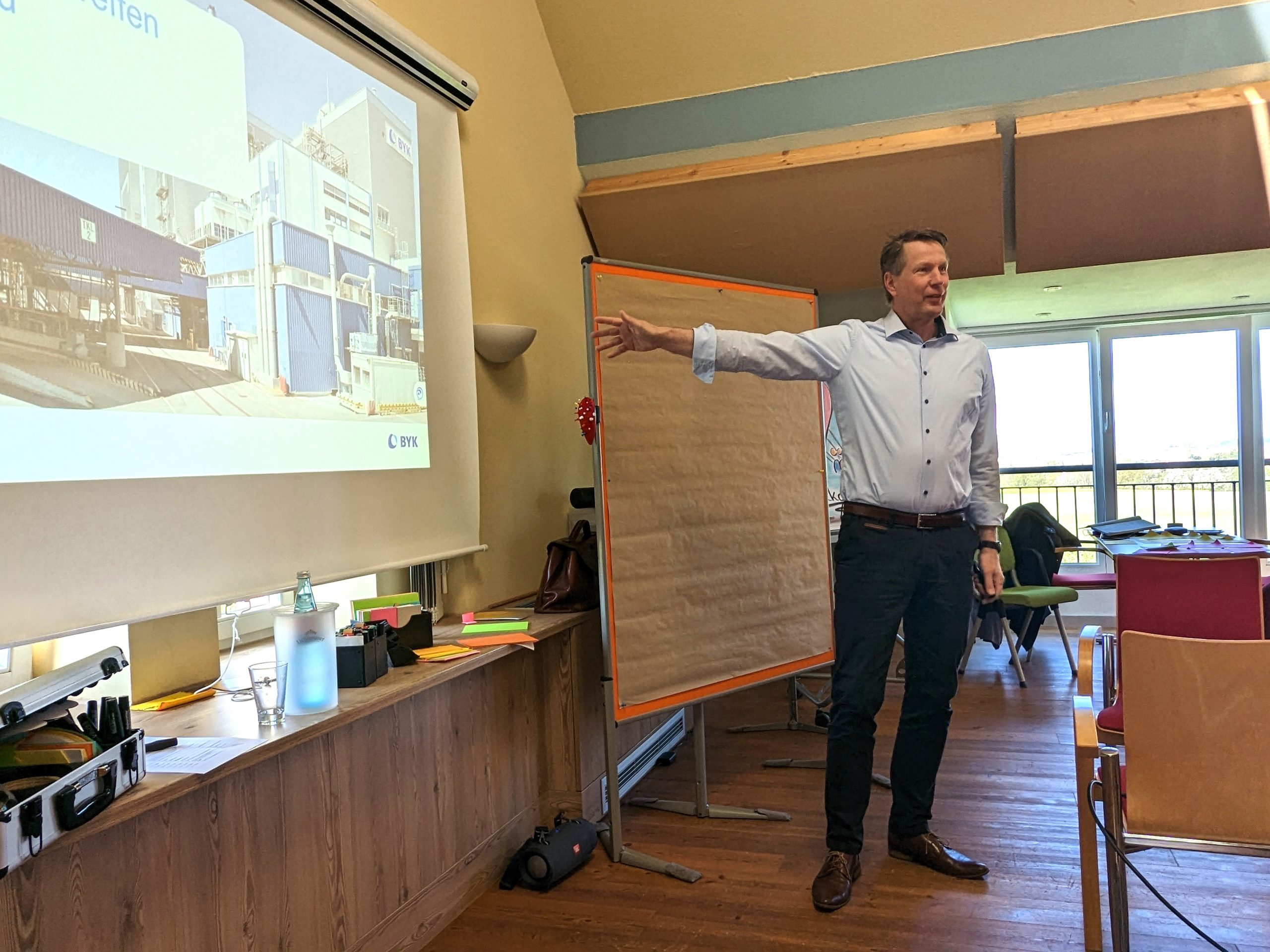
The second module began with two classical leadership tasks: strategy and creating meaning. We worked on how strategic decisions can give orientation in the everyday work of a shift — and used the Golden Circle to make the connection between the why, the how and the actual doing visible.
2 The limit
Stance cannot be decreed.
Tools help to structure leadership. But they do not answer how someone actually leads in difficult situations. Stance shows itself where decisions are not clear-cut, where interests collide or where someone has to take responsibility. It can therefore only be explained up to a point — far more readily observed and experienced.
3 The sparring
Five hundred kilometres.
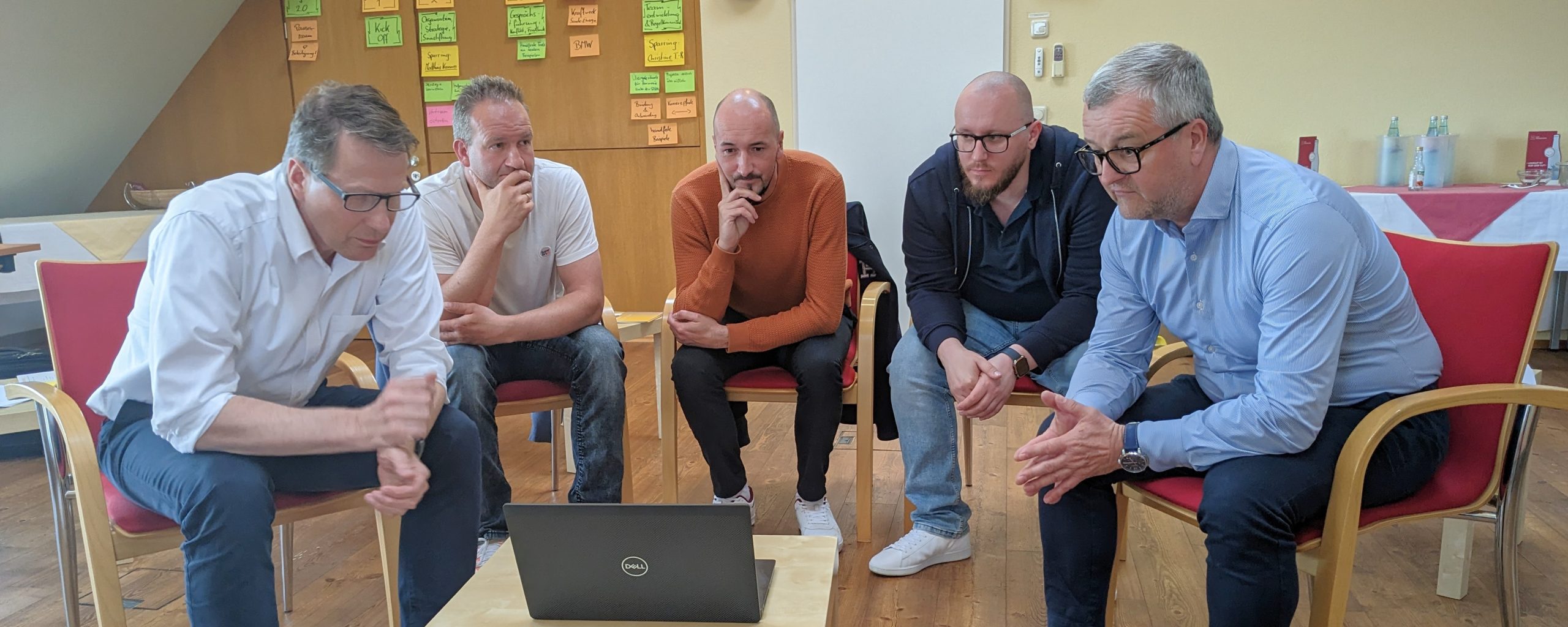
The managing director for production travelled more than 500 kilometres to spar with the shift supervisors: about the strategy of the company, about the purpose and responsibility of leadership — and about very concrete questions from the everyday work of a shift.
That was exactly where stance became visible: not as a model or a guiding principle, but in what a leader takes time for, which questions they take seriously, and how openly they engage with other people’s perspectives.
FROM THE WORK
Insights.

Participant feedback
We have never done it that way before!
A participant in the programme, shift supervisor at BYK-Chemie (translated)
A systemic reading
The most effective change did not come out of the training but out of the structure. After some ten years, the existing teams were put together afresh. That interrupted established relationships, routines and feedback loops — and created new constellations.
It did not simply dissolve the existing problems. But it changed the conditions under which they arose and were dealt with. Different people worked with one another, different observations became possible, new ideas found their way into everyday work more easily.
Organisational development therefore does not only mean teaching people something. Sometimes the more effective lever lies in changing the structures in which behaviour keeps reproducing itself.
Dr. Jonas Asendorpf


LET’S TALK