
CASES · STRATEGY
Strategy development in a district authority
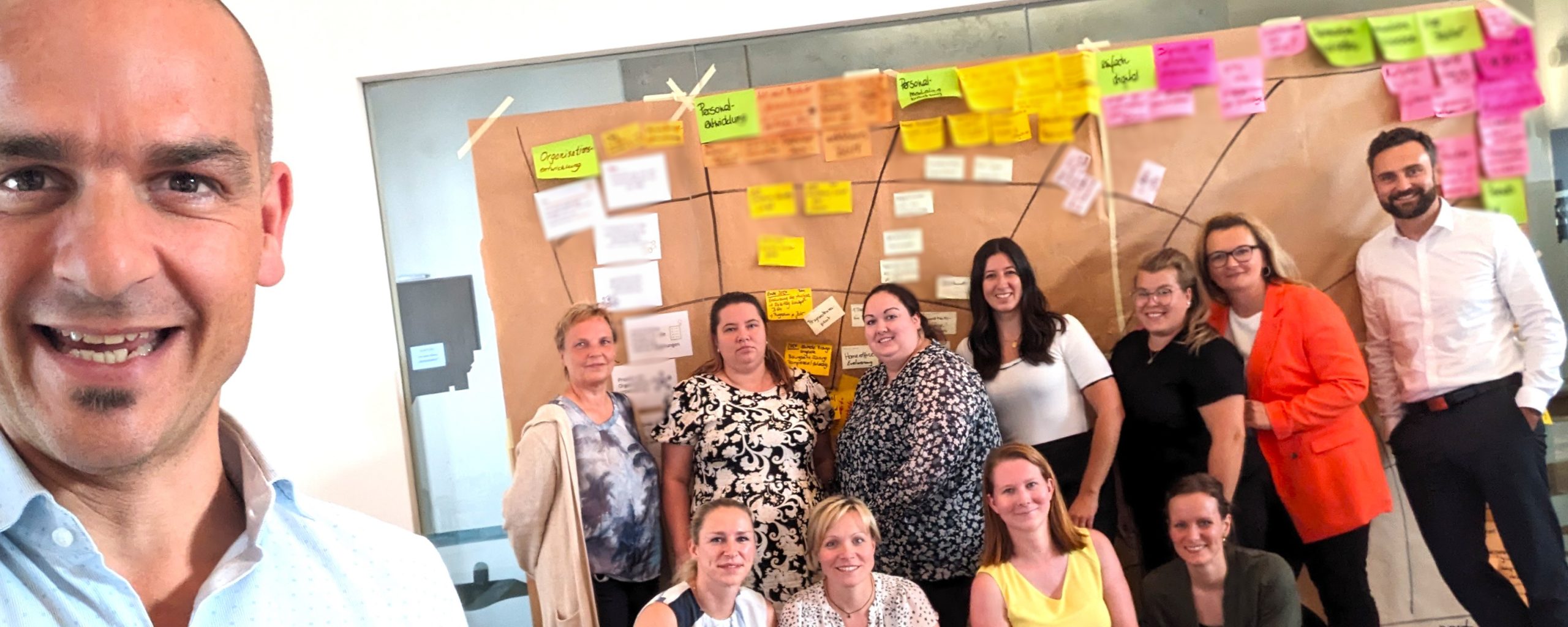
The district had adopted its strategy for the future. That raised the next question for the Office for Human Resources and Organisation: what does this strategy mean for us — and which strategic position of our own follows from it? Over seven months, managers from every level of the hierarchy worked on that translation together.
The engagement
- Client District authority, Office for Human Resources and Organisation
- Sector Public administration
- Period 2023
- Service Strategy development
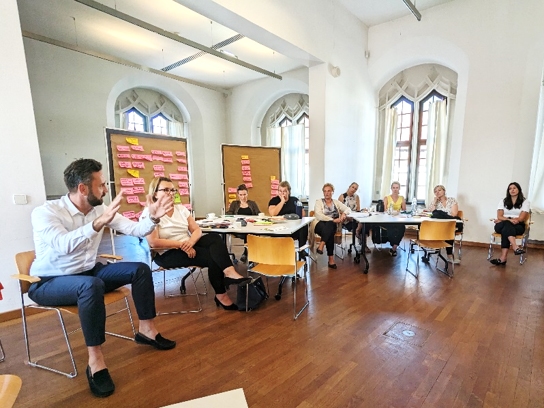
- Format Five workshops across all levels of the hierarchy
THE PROCESS
From target picture to annual slices.
1 Starting point
Where to begin.
The first thing to be settled was what strategy development is supposed to do for the office at all. On that basis we gathered the expectations of relevant stakeholders and the challenges coming towards the office in the years ahead. That became the shared starting point for the strategy work.
2 Approach
Developing options and discarding them.
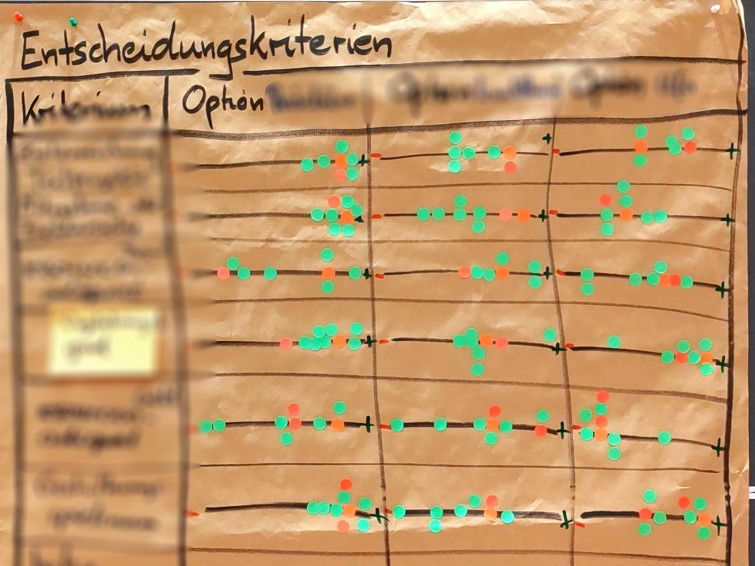
Analysis and questions about the future produced several strategic options. These were sharpened, tested against one another and then deliberately discarded — until one shared strategic position remained. From it we derived fields, objectives and concrete measures.
3 Result
Four annual slices.
The strategic measures were distributed across 2023, 2024, 2025 and “next”. That produced a concrete frame for implementation: how the Office for Human Resources and Organisation supports the district authority’s 2030 strategy.
The office’s own sense of its role became very vivid in the process: it sees itself as a travel agency for the specialist offices — with services tailored to them, and a regular look at whether the travellers are still doing well.
FROM THE WORK
Insights.
Participant feedback
“What began as differing perspectives coalesced into a shared vision—and that vision gave rise to a viable strategy. The process was professional and engaging, yet open enough to harness divergent viewpoints productively. This provided an important and lasting impetus for our realignment in human resources management.”
Jens Kabisch, Deputy Head of the District Administration of Northern Saxony (translated).
A systemic reading
What was interesting was what happened in the background of the strategy process. Setting the office up afresh, fundamentally and explicitly, made cracks visible in a few places that had previously been painted over rather than worked on. By the end, the office stood there with a changed line-up and with markedly greater capacity to work than at the beginning.
Dr. Jonas Asendorpf



LET’S TALK